


Made in Germany


Relution is developed, maintained and supported in Stuttgart. Development, support and hosting remain in Germany and are subject to European data protection regulations.
Digital devices such as smartphones, tablets, laptops and interactive whiteboards play a central role in modern work environments, educational institutions and the public sector, particularly in government agencies and critical infrastructures. They enable flexible work processes and open up new opportunities for collaboration and innovation. At the same time, their widespread adoption brings with it the responsibility to reliably protect sensitive data, consistently enforce security standards and comply with legal requirements such as the GDPR. In addition, measures must be taken to quickly lock or wipe lost or stolen devices in order to prevent data loss.
This is where Relution comes in. With a central UEM platform, businesses, schools and organizations can centrally manage all digital devices, enforce security policies and ensure the protection of sensitive information. At the same time, the platform gives IT teams the ability to automate processes, control data flows and comply with legal requirements. This makes it possible to create work and learning environments that are both more flexible and more secure.
Relution significantly simplifies the management and security of digital devices. Organizations can define central security standards, automatically configure devices, distribute policies and monitor device status using real-time monitoring. This is particularly beneficial in organizations with heterogeneous device fleets, multiple locations or hybrid work models.
Through features such as disk encryption, VPN integration and automated compliance checks, Relution not only protects against cyber threats but also supports compliance with data protection requirements. In addition, Relution Shield and Relution Decon are available as two specialized security add-ons that take network communication and content filtering to a new level. Furthermore, the central platform reduces administrative overhead and helps standardize IT processes without restricting the flexibility of employees or learners.
Relution is developed, maintained and supported in Stuttgart. Development, support and hosting remain in Germany and are subject to European data protection regulations.
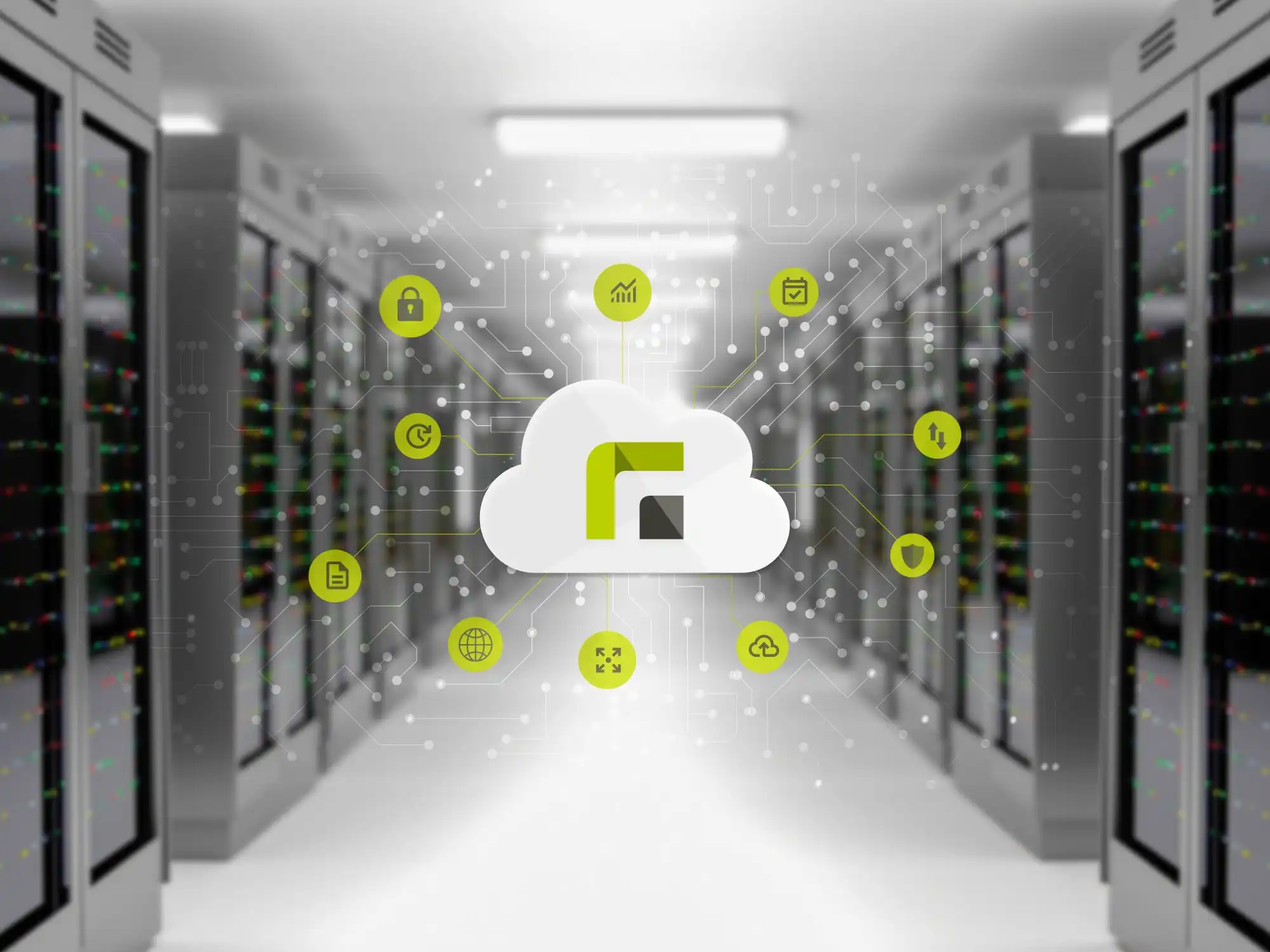
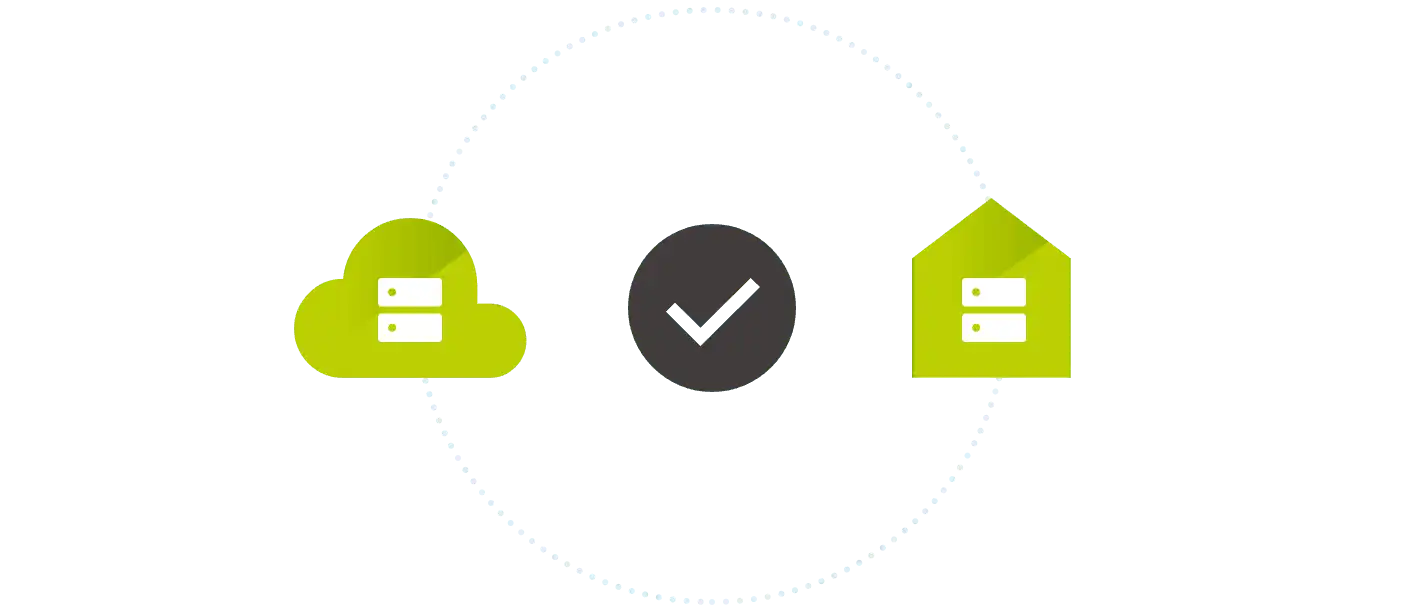
You decide where your data is stored. Relution can be operated either in your own infrastructure or in a German encrypted cloud.
Relution protects your devices and data on multiple levels simultaneously, from disk encryption and VPN and PKI to intelligent AI-powered content filtering.
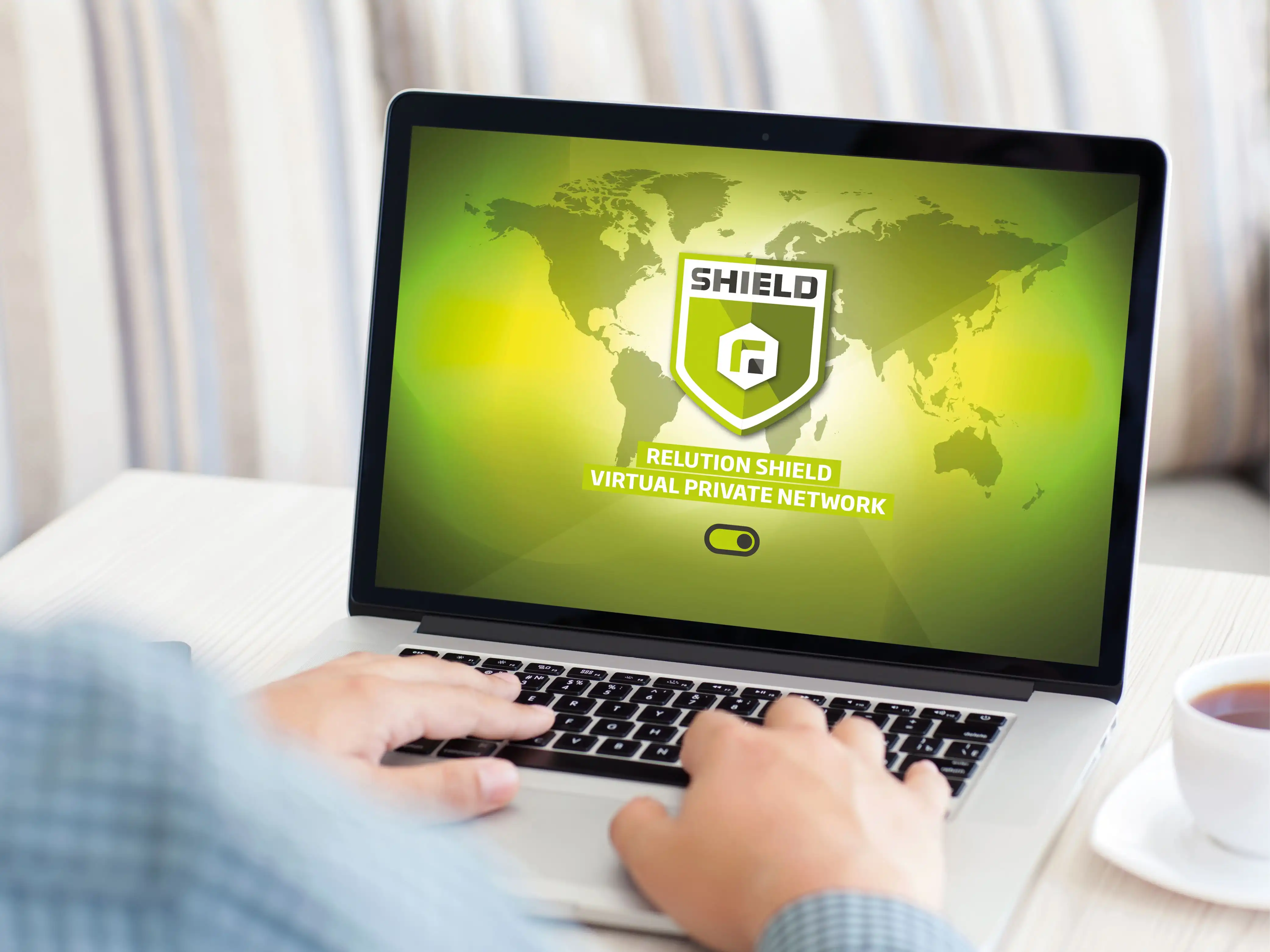
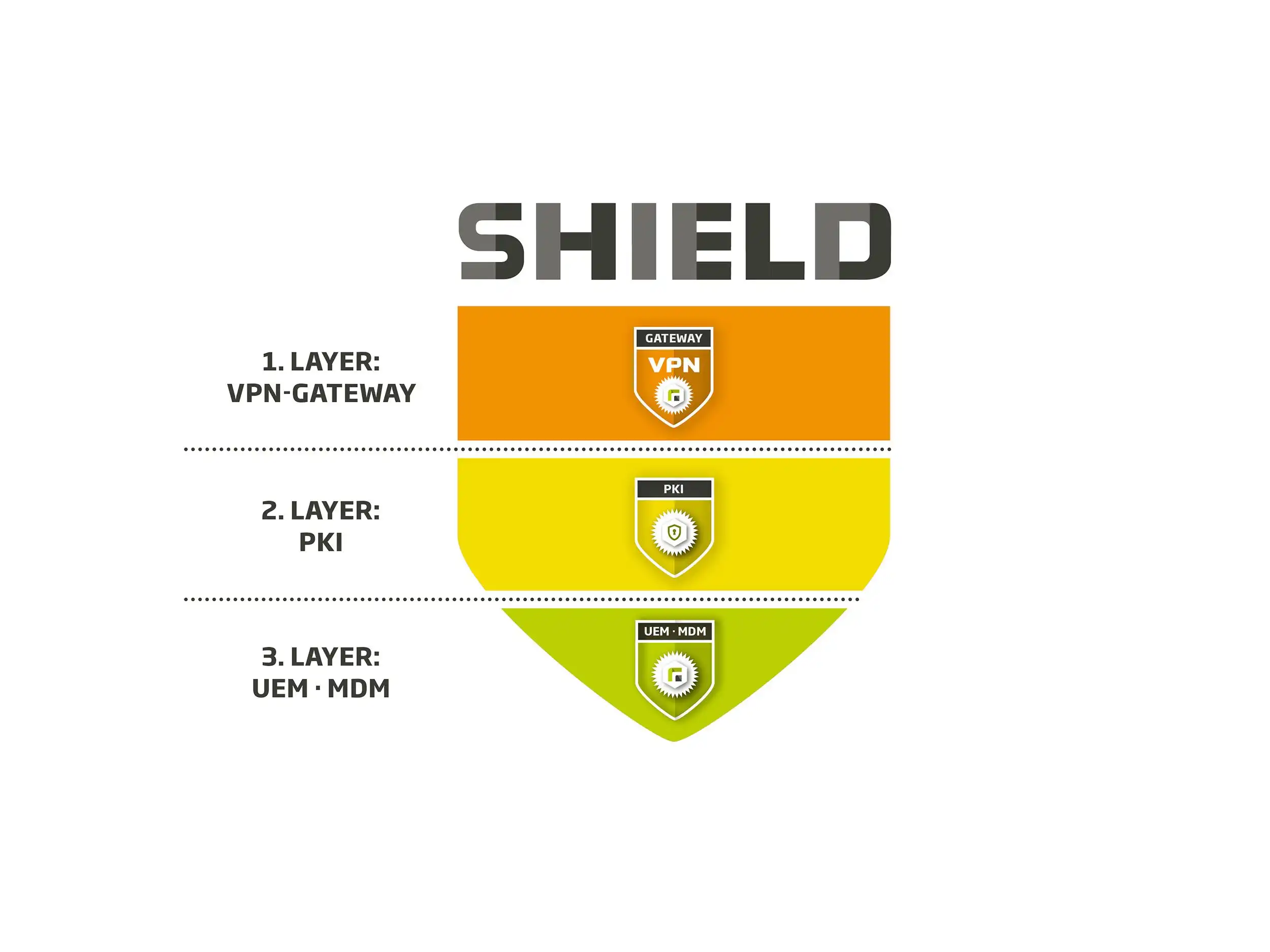
With Relution Shield, all data traffic from mobile devices can be routed through an encrypted VPN tunnel. An integrated public key infrastructure ensures that authentication is carried out via certificates rather than static passwords. In addition, a compliance check verifies the device status before access to the intranet is granted. This makes Relution Shield particularly suitable for organizations with high network security requirements.
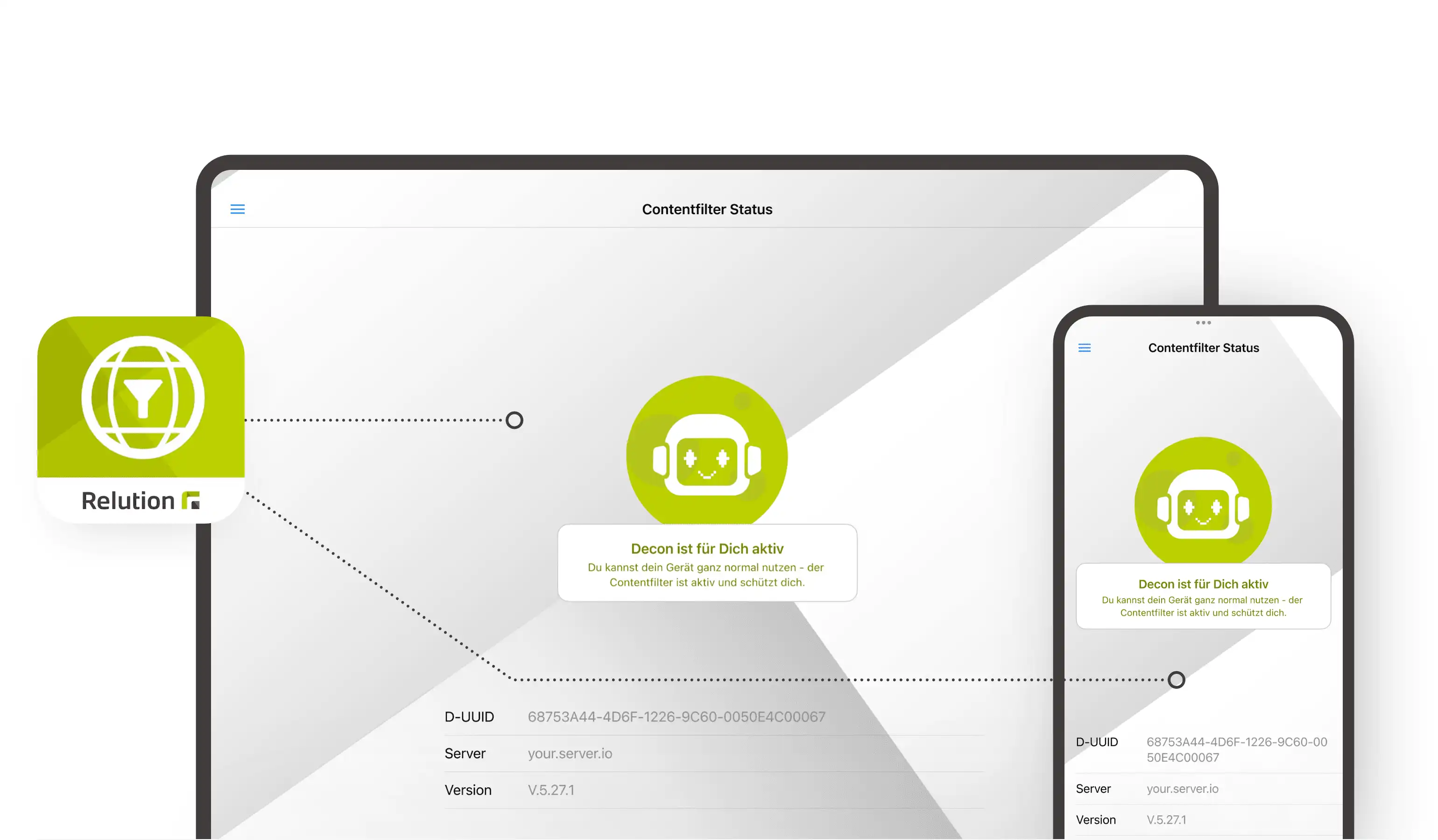
With Relution Decon, an AI-based content filter for iOS and iPadOS is available that classifies websites and apps in real time and blocks unwanted content via a system-wide DNS proxy. All data transmissions are SSL-encrypted. Since the filter cannot be disabled by the user, Relution Decon is particularly suitable for educational institutions and organizations that require reliable and consistent content control.
Relution offers multi-level access control for administrators and users. With multi-factor authentication, a second verification step can be set up and made mandatory for specific roles. In addition, IP access rules and automatic lockout after repeated failed login attempts can be configured. For integration into existing IT landscapes, Relution supports single sign-on via SAML and OpenID Connect as well as Active Directory and LDAP.
Relution can be operated either in your own infrastructure or in a German encrypted cloud. In both cases, the data is subject exclusively to European data protection regulations. No Apple or Google IDs need to be stored on devices. Thanks to multi-tenancy, Relution can also be operated in a data center or by the school authority with full data sovereignty. Device data generated by Relution cannot be accessed by Relution itself.
For encryption at device level, Relution supports established standards such as BitLocker for Windows as well as Red Hat LVM and Debian LUKS for Linux devices. In BYOD scenarios, strict data separation ensures that work and personal data remain completely isolated from one another, so that in the event of an employee leaving or a device being lost, only the work-related data can be selectively removed. In addition, devices can be locked via remote lock or completely wiped via remote wipe.
Relution provides all relevant information in a central real-time dashboard, through which device status, app status and compliance levels can be viewed at any time. Security policies are distributed centrally via policy and automatically enforced on devices, with automatic actions that can be triggered in the event of a violation. With geofencing, geographic zones can also be defined in which different security policies automatically apply, such as restricted app access or different Wi-Fi profiles outside the company premises. For more in-depth analysis, a Grafana monitoring integration is also available.
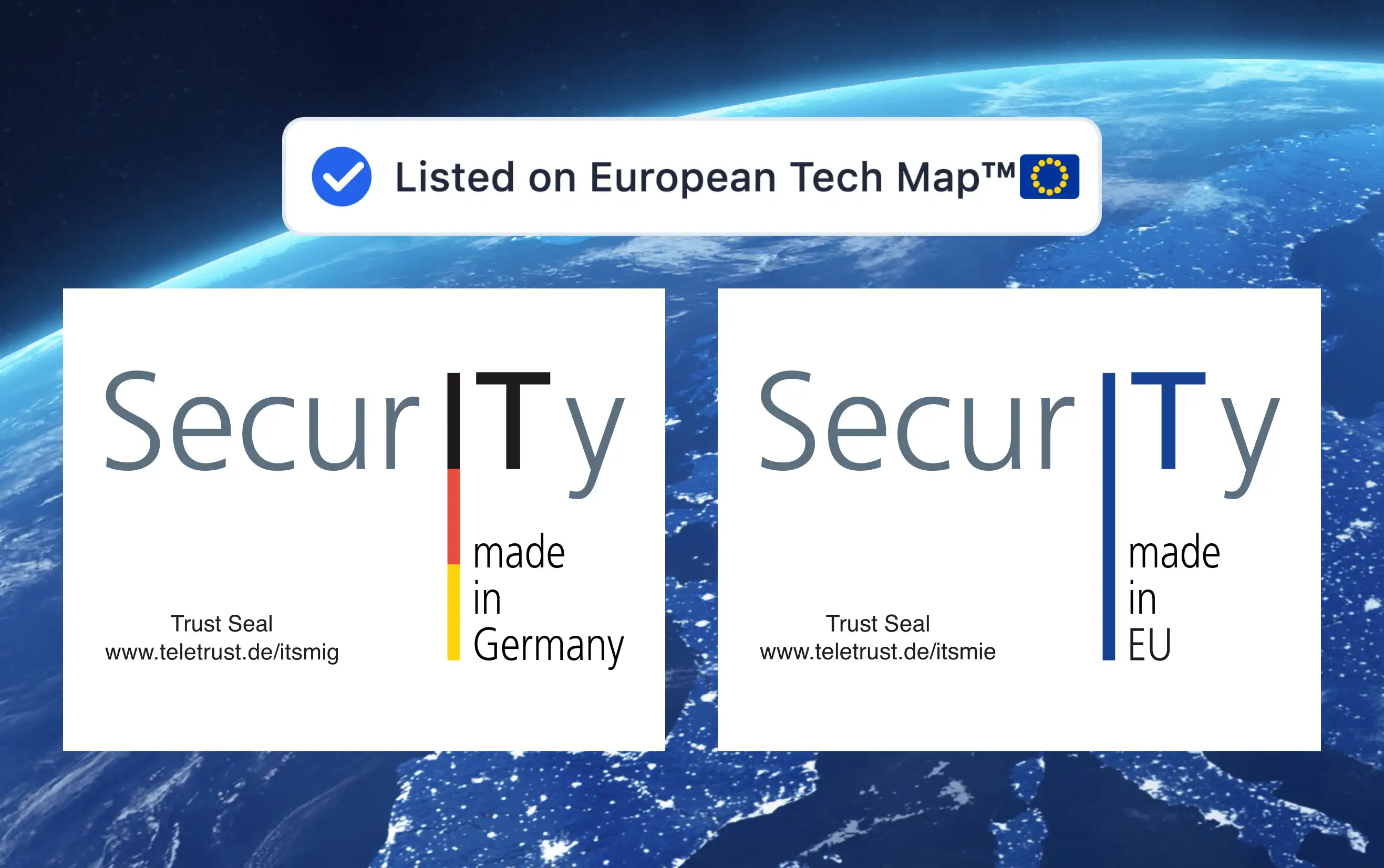
Relution carries the trademarked trust marks “IT Security Made in Germany” and “IT Security Made in EU” of the German Association for IT Security (TeleTrusT). In addition, Relution is currently undergoing certification according to Common Criteria EAL 4+ (ISO/IEC 15408) by the German Federal Office for Information Security (BSI), which is scheduled to be completed by the end of the year and is listed among the approved MDM server products for Brightsite deployment with a BSI approval statement. In parallel, the ISO 27001 certification is currently in progress (ISMS). It defines requirements and processes to help organizations systematically protect data, systems and information against risks and cyber attacks.
Yes, Relution can be operated either on-premises in your own infrastructure or in a German encrypted cloud. Both options are GDPR-compliant and enable operation without dependency on American cloud providers. This allows organizations to retain full control at all times over where their data is stored and who has access to it.
Yes, Relution operates in accordance with GDPR guidelines. Data is processed exclusively on European servers, and device data generated by Relution cannot be accessed by Relution itself. In addition, no Apple or Google IDs need to be stored on managed devices, which further strengthens data sovereignty.
In the event of loss or theft, devices can be immediately locked via remote lock or completely reset via remote wipe through Relution, reliably preventing access to sensitive data. In addition, disk encryption ensures that data cannot be read even without active remote wiping.
Relution automatically detects policy violations via the compliance check and can trigger predefined actions, such as revoking network access or locking the device. All violations are documented in the central dashboard, giving IT teams a complete overview of the security status of the entire device fleet at all times.
Relution carries the trademarked trust marks "IT Security Made in Germany" and "IT Security Made in EU" of the German Association for IT Security (TeleTrusT). These certify that Relution develops trustworthy IT security solutions, contains no hidden access points and meets the requirements of German data protection law. In addition, Relution has been recognized as the best MDM by the independent comparison platform trusted.de three times in a row – a further confirmation of its quality and data protection compliance.
Relution is currently undergoing certification according to Common Criteria EAL 4+ (ISO/IEC 15408) by the German Federal Office for Information Security (BSI). Common Criteria is an internationally recognized standard for evaluating the security of IT products; the assessment includes penetration tests, a complete source code analysis and a review of development processes by an accredited testing laboratory. The certification has not yet been completed, but underscores Relution's commitment to actively tested and verifiable IT security.
ISO/IEC 27001 is the globally recognized standard for the systematic management of information security. Certification to this standard demonstrates that a company treats information security not as an isolated measure, but as a managed and auditable process. ISO 27001 certification means: